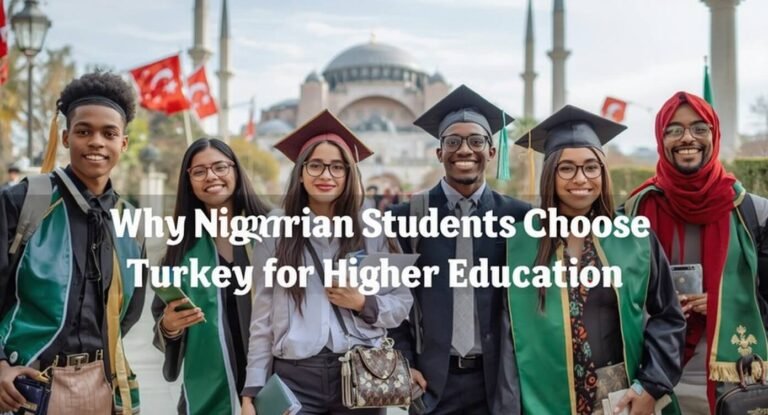
Why Nigerian Students Choose Turkey for Higher Education?
Nigeria, Africa’s most populous nation, has witnessed a remarkable shift in its students’ study abroad preferences over the past decade. While countries like the United Kingdom, United States, and Ghana traditionally dominated as preferred destinations, Turkey has rapidly emerged as a top choice for thousands of Nigerian students seeking quality international education. Today, Nigeria consistently ranks among the top five countries sending students to Turkey, with numbers growing annually despite global challenges and changing educational landscapes.
This trend isn’t accidental or temporary, it reflects fundamental changes in how Nigerian students and families evaluate study abroad options. Turkey’s rise as an educational destination for Nigerians stems from multiple converging factors: affordable quality education, accessible visa processes, cultural compatibility, generous scholarship opportunities, and Turkey’s strategic efforts to build educational partnerships with Nigeria. Understanding why Nigerian students increasingly choose Turkey over traditional Western destinations reveals broader patterns in international education and provides valuable insights for prospective students weighing their options.
The Nigeria-Turkey Educational Connection
The relationship between Nigeria and Turkey extends beyond recent educational exchanges to encompass growing diplomatic, economic, and cultural ties. Turkey has invested significantly in strengthening bilateral relations with Nigeria through trade partnerships, infrastructural projects, and educational initiatives. The Turkish government recognizes Nigeria’s importance as Africa’s largest economy and most populous nation, viewing educational exchange as foundational to long-term partnership.
Turkish Airlines’ extensive network connecting Istanbul to Lagos, Abuja, and Kano facilitates travel, making Turkey more accessible than many European destinations requiring multiple connections. The Turkish Embassy in Abuja and Consulate in Lagos actively promote educational opportunities, organize education fairs, and facilitate student visa processing. These official efforts have raised awareness about Turkish universities among Nigerian families who might not otherwise have considered Turkey as an option.
Nigerian students who studied in Turkey have formed active alumni networks that encourage younger Nigerians to follow their paths. These alumni share experiences, provide guidance, and demonstrate successful outcomes, graduating, securing employment, or returning to Nigeria with valuable qualifications. This word-of-mouth promotion proves more powerful than any official marketing campaign, as prospective students trust peer experiences more than institutional claims.
Affordability: Education Within Reach
Perhaps the most compelling factor driving Nigerian students to Turkey is affordability. Economic challenges in Nigeria, including currency devaluation and limited foreign exchange availability, have made traditional Western education increasingly unaffordable for most Nigerian families. UK universities charge international students £15,000-35,000 annually (approximately ₦30-70 million at current exchange rates), while US institutions often exceed $30,000-60,000 yearly. When combined with expensive living costs in these countries, the total annual expense easily reaches ₦40-80 million or more—simply impossible for most Nigerian families.
Turkey offers dramatically different economics. Turkish public universities charge international students tuition fees ranging from $400-4,000 annually (approximately ₦600,000-6 million), while private universities cost $4,000-15,000 yearly (₦6-22 million). Even the most expensive Turkish private universities cost less than single semesters at comparable Western institutions. Living costs in Turkish cities typically range from $400-700 monthly (₦600,000-1 million), covering accommodation, food, transportation, and personal expenses—far less than London, New York, or other major Western education centers.
For a typical four-year bachelor’s degree, total costs in Turkey might range from ₦10-40 million depending on university type and lifestyle, compared to ₦150-300 million for equivalent Western education. This massive cost differential makes international education achievable for Nigerian middle-class families who possess some resources but cannot access the enormous sums required for Western universities.
The favorable cost structure extends beyond tuition to daily expenses. Nigerian students in Turkey report that careful budgeting allows comfortable lifestyles without constant financial stress. The ability to occasionally enjoy meals out, participate in social activities, and travel within Turkey without depleting savings contributes to better overall student experiences compared to Western cities where students often struggle financially despite part-time work.
Türkiye Scholarships: Life-Changing Opportunities
The Turkish government’s Türkiye Scholarships program represents one of the most significant factors attracting Nigerian students. This comprehensive scholarship provides full tuition coverage, monthly stipends (approximately $300-400), accommodation support or housing allowances, health insurance, one-year Turkish language preparation, and even round-trip airfare. For Nigerian students, this scholarship transforms international education from an impossible dream to an achievable reality.
Türkiye Scholarships accepts applications from Nigerian students across all academic fields from undergraduate through doctoral levels. The relatively accessible application process—requiring academic transcripts, recommendation letters, and motivation essays—doesn’t demand the extensive standardized testing or prohibitively expensive application fees common with Western scholarships. Thousands of Nigerian students have received these scholarships over the past decade, creating pathways that didn’t exist previously.
The scholarship program’s holistic approach addresses more than just finances. Recipients receive comprehensive support including orientation programs familiarizing new students with Turkish life, academic advising helping navigate university systems, cultural activities promoting integration and understanding, and alumni networks connecting current students with successful graduates. This structured support system proves particularly valuable for Nigerian students navigating cultural and geographical distance from home.
Beyond government scholarships, individual Turkish universities offer merit-based scholarships reducing tuition by 25-100% based on academic achievement or entrance exam performance. These institutional scholarships provide additional funding opportunities for high-achieving Nigerian students who may not receive government scholarships but still deserve financial support.
Visa Accessibility: Overcoming Traditional Barriers
Nigerian students face significant visa challenges when applying to Western countries, with rejection rates for UK, US, and Schengen visas often exceeding 40-50% despite meeting stated requirements. These rejections cause enormous frustration, financial losses from non-refundable application fees, and psychological toll on students who’ve secured university admissions only to have visa dreams dashed.
Turkey’s student visa process, while still requiring proper documentation, proves significantly more accessible for Nigerian students. Turkish embassies and consulates in Nigeria have streamlined procedures specifically for student visa applications. The Turkish government’s explicit policy of attracting international students translates into more accommodating visa approaches where genuine students with university admission letters typically receive visas without the suspicion and barriers common in Western applications.
Processing times for Turkish student visas typically run 2-4 weeks compared to months for some Western countries. Visa fees remain reasonable at approximately ₦100,000-150,000, compared to significantly higher Western visa costs. The relative predictability of Turkish student visa outcomes provides peace of mind for Nigerian families making substantial educational investments.
The visa accessibility factor cannot be overstated. Many Nigerian families have watched qualified students receive Western university admissions only to face visa rejections, wasting application fees and delaying education by a year or more. Turkey’s more welcoming visa approach eliminates this major source of anxiety and financial risk, making it a more reliable pathway to international education.
Cultural and Religious Compatibility
For many Nigerian students, particularly Muslims from Nigeria’s northern regions, Turkey offers cultural and religious environments that feel more welcoming than Western alternatives. As a Muslim-majority country, Turkey provides prayer facilities, halal food options, and cultural norms aligning with Islamic values while maintaining secular educational institutions and diverse social environments accommodating students of all backgrounds.
This compatibility extends beyond religion to broader cultural values. Turkish culture emphasizes hospitality, respect for elders, and family connections—values resonating strongly with Nigerian cultures across ethnic groups. Nigerian students frequently report feeling more accepted and less culturally alienated in Turkey than peers studying in Western countries where they sometimes encounter discrimination or cultural isolation.
The substantial Nigerian student community in Turkish cities, particularly Istanbul and Ankara, creates supportive networks where new arrivals find mentorship, friendship, and shared experiences. Nigerian student associations organize cultural events celebrating Nigerian heritage, provide practical support for newcomers navigating Turkish systems, create social networks combating homesickness, and advocate for Nigerian student interests with universities and authorities.
Turkish universities, having hosted Nigerian students for years, have developed familiarity with Nigerian educational systems, cultural backgrounds, and specific needs. This institutional knowledge creates more accommodating environments compared to universities with limited experience hosting Nigerian students.
Quality Education with International Recognition
Nigerian students and families increasingly recognize that Turkish universities offer quality education rivaling Western institutions. Universities like Boğaziçi University, Middle East Technical University (METU), Istanbul Technical University, Koç University, and Sabancı University rank among the world’s top institutions and maintain international accreditations ensuring quality standards.
Turkish engineering, medical, and business programs receive particular recognition globally. Nigerian students graduating from Turkish engineering schools successfully pursue careers internationally and continue to graduate studies at prestigious institutions worldwide. Turkish medical degrees, when combined with required licensing examinations, qualify graduates to practice medicine in Nigeria and other countries after meeting local requirements.
The Council of Higher Education (YÖK) maintains rigorous quality assurance ensuring Turkish universities meet international standards. Turkey’s participation in the Bologna Process aligns Turkish higher education with European frameworks, facilitating degree recognition. Nigerian students graduating from Turkish universities return home with credentials recognized by Nigerian authorities and employers, enabling professional practice and career advancement.
Many Turkish universities offer English-taught programs, eliminating language barriers for Nigerian students accustomed to English-medium education. Engineering, business, international relations, and sciences commonly feature English instruction, enabling full participation without Turkish language requirements. For Turkish-medium programs, comprehensive preparatory language courses prepare students for academic success.
Career Opportunities and Professional Networks
Turkey’s growing economy and expanding business presence across Africa, including Nigeria, create career opportunities connecting students’ education with professional futures. Turkish companies increasingly operate in Nigerian markets across construction, textiles, manufacturing, food processing, and consumer goods sectors. Nigerian students studying in Turkey build networks with these companies through internships, campus recruitment, and professional connections.
Some Nigerian graduates secure employment with Turkish companies either in Turkey or in Nigerian operations, leveraging both their academic credentials and cultural knowledge of Nigerian markets. This career pathway provides tangible returns on educational investments and justifies choosing Turkey over destinations without direct business connections to Nigeria.
Entrepreneurial opportunities exist for Nigerian students who establish businesses connecting Turkey with Nigerian markets. The relationships and knowledge gained during Turkish education facilitate trade, manufacturing partnerships, or service provision between countries. Several successful Nigerian entrepreneurs credit their Turkish education with providing networks and insights enabling their business ventures.
Turkish universities maintain active career services organizing job fairs, networking events, and recruitment activities. International offices specifically support Nigerian and other African students in navigating career planning, creating professional networks that extend beyond graduation.
Practical Considerations and Challenges
While Turkey offers compelling advantages, Nigerian students should maintain realistic expectations about challenges. Language barriers can initially complicate daily life in non-English-speaking environments, though most Turkish cities have communities where basic English works and Turkish language proficiency improves with time and study.
Distance from Nigeria creates emotional challenges, though affordable Turkish Airlines flights and modern communications technology help maintain family connections. Flights between Nigeria and Turkey typically cost $400-800 roundtrip, making periodic home visits financially feasible compared to more expensive routes to Western destinations.
Some Nigerian students report occasional curiosity or questions from local Turkish populations less familiar with African diversity. However, most students describe generally positive experiences and welcoming attitudes, particularly in university environments and major cities with substantial international populations.
Banking and money transfer challenges sometimes arise given Nigeria’s foreign exchange restrictions. Students should research reliable money transfer methods before departure and potentially open Turkish bank accounts upon arrival to simplify financial management.
Success Stories and Alumni Impact
Thousands of Nigerian students have successfully completed Turkish education and returned home to contribute professionally to Nigerian society. Alumni work across sectors including medicine and healthcare, engineering and construction, business and finance, information technology, education and research, and government and international organizations.
Many credit their Turkish education with providing not just academic credentials but also cross-cultural competencies, language skills (Turkish, English, and often Arabic), international perspectives, and professional networks that differentiate them in competitive Nigerian job markets. These success stories inspire younger Nigerians to follow similar paths, creating self-reinforcing cycles of educational migration.
Some Nigerian graduates remain in Turkey, pursuing graduate degrees or career opportunities before eventually returning home with even stronger qualifications and international experience. Others use Turkish education as springboards for opportunities in Gulf countries, Europe, or other international destinations, demonstrating Turkish degrees’ portability and recognition.
How to Get Started
Nigerian students interested in Turkish education should begin by researching universities and programs aligning with their interests through the Study in Turkey portal providing comprehensive information. Contact Turkish embassies in Nigeria for guidance on visa processes and educational opportunities, and attend education fairs where Turkish universities actively recruit in Nigeria.
Apply for Türkiye Scholarships if eligible—deadlines typically fall between December and February annually, requiring advance preparation of application materials. Consider both scholarship and self-funded options, as affordable tuition makes Turkey accessible even without scholarships for families with modest resources.
Connect with Nigerian students currently studying in Turkey through social media groups, forums, or university international offices. These connections provide firsthand insights, practical advice, and realistic expectations about Turkish student life. Prepare academically by maintaining strong grades and taking required entrance examinations like YÖS or SAT depending on target universities.
Key Takeaways
Essential Points About Nigerian Students Choosing Turkey:
• Affordability drives decisions: Turkish education costs 70-80% less than Western alternatives while maintaining quality standards and international recognition.
• Türkiye Scholarships provide comprehensive support: Full tuition, stipends, accommodation, and health insurance make international education accessible for talented Nigerian students.
• Visa accessibility is superior: Turkish student visas prove more accessible with higher approval rates compared to Western countries’ increasingly restrictive policies.
• Cultural compatibility matters: Turkey’s welcoming environment and substantial Nigerian student communities ease transition and cultural adjustment challenges.
• Quality education meets international standards: Turkish universities offer recognized degrees, particularly strong in engineering, medicine, and business fields.
• English-taught programs eliminate barriers: Hundreds of programs operate in English, allowing Nigerian students to study without Turkish language requirements.
• Growing career opportunities exist: Turkish companies’ expanding Nigerian operations and entrepreneurial possibilities create employment prospects connecting education with professional futures.
• Strong Nigerian student communities provide support: Established networks offer mentorship, cultural connection, and practical assistance for new arrivals.
• Geographic accessibility via Turkish Airlines: Direct flights from Lagos and Abuja make Turkey more accessible than many European destinations requiring multiple connections.
• Bilateral relationships are strengthening: Growing Turkey-Nigeria partnerships in education, trade, and diplomacy create supportive frameworks for student exchange.
• Success stories inspire confidence: Thousands of Nigerian alumni demonstrate successful outcomes, returning home with valuable qualifications and international experiences.
• Realistic expectations necessary: While offering advantages, students should understand challenges including initial language barriers, distance from home, and cultural adjustment periods.