Is Turkey Becoming the New Hub for International Students in 2025?
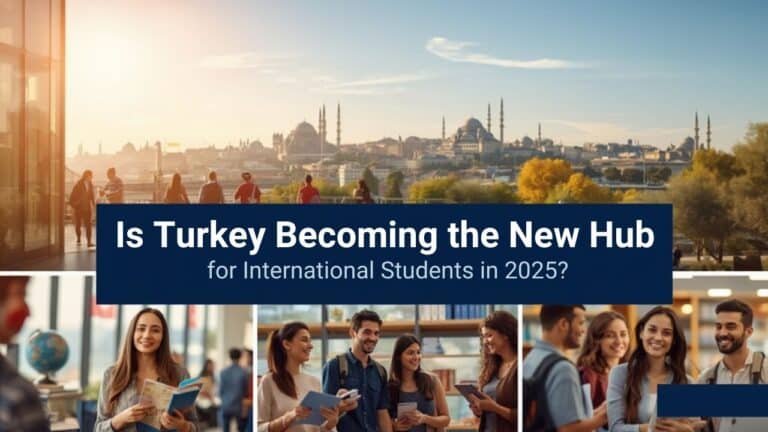
The global landscape of international education is undergoing a dramatic transformation. While traditional destinations like the United States, United Kingdom, and Australia have long dominated the international student market, emerging alternatives are capturing increasing attention from students worldwide. Turkey, strategically positioned between Europe and Asia, has quietly but rapidly evolved into one of the most compelling destinations for international students. As we move through 2025, the question is no longer whether Turkey is relevant to international education—it’s whether Turkey is becoming the next major global education hub.
The numbers tell a striking story. Turkey has witnessed explosive growth in international student enrollment over the past decade, rising from approximately 50,000 international students in 2013 to over 250,000 by 2024, with projections suggesting continued growth through 2025 and beyond. This remarkable increase isn’t random or temporary—it reflects systematic investments in educational infrastructure, strategic policy decisions, demographic shifts, and changing global economics that position Turkey as an increasingly attractive alternative to traditional Western destinations. This comprehensive analysis examines whether Turkey is genuinely becoming the new hub for international students and what this transformation means for prospective students evaluating their options.
The Numbers: Turkey’s Rising International Student Population
Turkey’s international student growth trajectory surpasses most competitors. The Council of Higher Education (YÖK) reports that international students now comprise approximately 8% of Turkey’s total higher education enrollment—a significant proportion demonstrating Turkey’s increasing global appeal. More importantly, the growth rate continues accelerating rather than plateauing, suggesting Turkey hasn’t reached capacity and maintains momentum.
The composition of Turkey’s international student body reveals strategic geographic diversification. While European countries primarily attract students from former colonies or immediate neighbors, Turkey draws students from over 180 countries across multiple continents. Major source countries include Azerbaijan, Syria, Turkmenistan, Afghanistan, Iraq, Iran, Pakistan, and increasingly, significant numbers from Sub-Saharan Africa including Nigeria, Kenya, and Somalia, as well as growing populations from Central Asia, the Balkans, and the Middle East.
This geographic diversity isn’t accidental but reflects Turkey’s deliberate diplomatic strategy positioning itself as a bridge between civilizations and cultivating educational partnerships across regions where historical, cultural, or strategic connections exist. Turkey has successfully avoided over-dependence on any single source country, creating stable, diverse international student populations that enhance cross-cultural learning environments.
Strategic Government Investment and Policy Support
Turkey’s emergence as an education hub reflects conscious government strategy rather than market forces alone. Turkish authorities have implemented comprehensive policies explicitly designed to attract international students and position Turkey competitively in global education markets.
The Türkiye Scholarships program, launched in 2012, exemplifies this commitment. This government-funded scholarship program ranks among the world’s most generous, providing comprehensive support including full tuition, monthly stipends, accommodation, health insurance, Turkish language preparation, and even round-trip airfare. The program awards over 5,000 scholarships annually to students from over 160 countries, specifically targeting developing regions including Africa, Central Asia, the Middle East, and the Balkans. This investment—totaling hundreds of millions of dollars—demonstrates Turkey’s long-term commitment to educational diplomacy.
Beyond scholarships, Turkish authorities have simplified visa procedures for international students, recognizing that bureaucratic barriers deter applicants. Student visa processes for most nationalities have become more streamlined, with higher approval rates and clearer requirements compared to increasingly restrictive policies in Western countries. Turkey views international students as future partners and cultural ambassadors rather than immigration risks requiring maximum scrutiny.
YÖK has implemented quality assurance frameworks aligned with European standards through Turkey’s participation in the Bologna Process, facilitating degree recognition internationally and ensuring Turkish universities meet globally recognized quality benchmarks. Investments in university infrastructure, research facilities, and English-taught programs specifically target international student attraction and retention.
The Economics: Affordability in an Expensive World
Perhaps no single factor drives Turkey’s rise more powerfully than simple economics. International education has become prohibitively expensive at traditional destinations, effectively restricting access to wealthy elites. Turkey offers dramatic cost advantages without compromising educational quality.
Tuition at Turkish public universities typically ranges from $400-4,000 annually for international students—often less than single-semester costs at Western institutions. Private Turkish universities charge $4,000-15,000 annually, still significantly below Western private universities charging $30,000-70,000 yearly. Even Turkey’s most expensive programs cost less than mid-range Western alternatives.
Living costs compound these differences. Students in London, New York, or Sydney easily spend $2,000-3,000 monthly on accommodation, food, and necessities. Turkish cities offer comfortable student lifestyles for $400-700 monthly, with Istanbul at the higher end and regional cities substantially cheaper. This means total annual costs for Turkish education—including tuition and living expenses—typically range from $5,000-20,000 compared to $40,000-80,000+ at Western destinations.
For middle-class families from developing countries facing currency devaluations and economic pressures, this cost differential transforms international education from impossible dreams to achievable goals. A Nigerian, Egyptian, or Pakistani family that cannot afford UK or US education can potentially send children to quality Turkish universities, creating access to international credentials previously restricted to elites.
Western countries’ increasing tuition fees and cost-of-living crises unintentionally drive students toward affordable alternatives like Turkey. As economic pressures intensify globally, Turkey’s affordability advantage strengthens rather than diminishes.
Academic Quality and Rising University Rankings

Cost advantages would mean little without educational quality, but Turkey has systematically improved its universities’ academic standards and international recognition. Multiple Turkish universities now rank in global top 500 lists, with steady upward trajectories reflecting research output increases, faculty quality improvements, and infrastructure investments.
Boğaziçi University, Middle East Technical University (METU), Istanbul Technical University, Koç University, and Sabancı University consistently rank among the world’s top institutions in various disciplines. Turkish universities have increased research output dramatically, with publications in international journals growing substantially over the past decade. Citation rates and research impact have similarly improved, indicating that Turkish research contributes meaningfully to global knowledge production.
International accreditations validate quality improvements. Turkish business schools have earned AACSB, EQUIS, and AMBA accreditations—the prestigious “triple crown” achieved by less than 1% of business schools globally. Engineering programs maintain MÜDEK accreditations aligned with international engineering education standards. Medical schools produce graduates who successfully practice worldwide after meeting local licensing requirements.
English-taught programs have expanded dramatically. Turkish universities now offer hundreds of English-medium programs from undergraduate through doctoral levels, eliminating language barriers for international students. This expansion reflects both demand and supply—universities invest in English instruction capacity while international students increasingly seek Turkish education specifically.
The quality narrative isn’t just about elite universities. Turkey’s systematic quality assurance across its higher education sector means that even mid-tier universities maintain reasonable standards, ensuring students across selectivity levels receive legitimate education rather than diploma mills that plague some emerging education markets.
Geographic and Cultural Advantages
Turkey’s geographic position between Europe and Asia creates unique advantages for international education. Istanbul, straddling two continents, symbolizes this bridge function literally and figuratively. This positioning enables Turkey to attract students from multiple regions who view Turkey as culturally accessible in ways purely Western or Eastern destinations might not be.
For Middle Eastern and Central Asian students, Turkey offers Muslim-majority cultural environments with familiar values, halal food, and prayer facilities while maintaining secular educational institutions and diverse social spaces. This balance proves difficult to find elsewhere—Western countries offer quality education but sometimes cultural alienation, while Middle Eastern alternatives may lack educational quality or social freedoms.
For African students, Turkey provides cultural compatibility (particularly for Muslim Africans) without colonial baggage that complicates relationships with European former colonizers. Turkey’s active diplomacy in Africa has raised awareness about Turkish educational opportunities while demonstrating respect for African partnerships.
For European students, particularly from the Balkans, Caucasus, and Eastern Europe, Turkey offers proximity, cultural familiarity from historical connections, and increasingly recognized degrees at lower costs than Western European alternatives.
Turkey’s active airline connectivity through Turkish Airlines’ hub in Istanbul means direct flights connect Turkey to over 300 destinations globally, making travel to/from Turkey more convenient than many alternatives requiring multiple connections.
Challenges and Limitations
Honest assessment requires acknowledging challenges that could limit Turkey’s emergence as a true global education hub:
Language remains a barrier despite English-program growth. Most Turkish universities primarily operate in Turkish, limiting accessibility for international students unwilling or unable to learn Turkish. While one-year preparatory programs address this, they extend degree timelines and costs. Turkey still lags behind fully English-operating destinations in language accessibility.
Political considerations affect some prospective students’ perceptions. Turkey’s complex political situation, including concerns about press freedom, academic freedom, and regional conflicts, creates hesitation for some families and students who prioritize perceived stability. Fair or not, these perceptions influence destination decisions.
Bureaucratic challenges persist despite improvements. Foreign students navigating residence permits, work permits, or administrative procedures sometimes encounter frustration with Turkish bureaucracy that can feel opaque or inconsistent. While universities provide support, administrative experiences don’t always match smoothly efficient systems in some Western countries.
Recognition questions linger in some markets. While Turkish degrees from established universities receive international recognition, some employers or graduate programs in certain countries remain unfamiliar with Turkish institutions, requiring additional explanation or credential evaluation. This situation improves as Turkish university reputations grow, but recognition isn’t yet universal.
Limited post-graduation work opportunities exist compared to countries with explicit post-study work visas (Canada, Australia, UK’s previous policies). Turkey doesn’t maintain structured pathways for international graduates to remain and work long-term, meaning most students return home or move elsewhere after graduation. This limitation reduces Turkey’s appeal for students prioritizing immigration alongside education.
Comparative Analysis: Turkey vs. Traditional Destinations

How does Turkey compare to established education hubs?
Turkey vs. United Kingdom:
- Cost: Turkey dramatically cheaper (70-80% less total cost)
- Quality: UK universities rank higher overall, but top Turkish universities are comparable to mid-tier UK institutions
- Accessibility: Turkish visas more accessible; UK increasingly restrictive
- Cultural: UK offers English-language immersion; Turkey offers unique cultural positioning
- Employment: UK traditionally offered post-study work; Turkey lacks equivalent pathways
Turkey vs. United States:
- Cost: Turkey far more affordable
- Quality: Top US universities exceed Turkish counterparts, but mid-tier comparisons are more competitive
- Accessibility: US visas historically challenging for many nationalities; Turkey more accessible
- Diversity: Both offer diverse international communities
- Prestige: US degrees carry stronger global prestige currently
Turkey vs. Germany:
- Cost: Both affordable (German public universities charge minimal tuition)
- Language: Germany increasingly offers English programs; Turkey similar trajectory
- Quality: German universities have stronger global reputations currently
- Location: Turkey offers warmer climate and different cultural experience
- Accessibility: Both relatively accessible for visas
Turkey vs. Malaysia/Singapore (Asian hubs):
- Cost: Turkey comparable to Malaysia, cheaper than Singapore
- Quality: Singapore ranks higher; Turkey competitive with Malaysia
- Cultural: Different regional appeals—Turkey for West Asia/Middle East/Africa; Malaysia/Singapore for East/Southeast Asia
- Language: All offer English programs; Turkey also requires Turkish for some programs
Emerging Hub or Fully Arrived?
Is Turkey becoming the new hub for international students? The answer is nuanced: Turkey has already become a significant regional hub and is in the process of becoming a global hub, though it hasn’t yet achieved the comprehensive global recognition of established Western destinations.
Evidence supporting “yes”:
- Sustained rapid growth in international student numbers
- Strategic government commitment through policy and funding
- Improving academic quality and international rankings
- Dramatic cost advantages making international education accessible
- Geographic and cultural positioning attracting diverse populations
- Infrastructure investments demonstrating long-term commitment
- Successful track record hosting hundreds of thousands of international students
Evidence suggesting “not yet fully”:
- Global brand recognition still developing compared to Western alternatives
- Language accessibility remains partial despite improvements
- Post-graduation pathways underdeveloped
- Political perceptions create hesitation for some markets
- Degree recognition universal but not yet automatic in all contexts
Perhaps the most accurate assessment is that Turkey is transitioning from emerging hub to established hub—no longer a novel alternative but not yet reaching the mature stability of century-old education exporters. The trajectory clearly points upward, with momentum accelerating rather than slowing.
For prospective international students in 2025, Turkey represents a legitimate, high-quality option deserving serious consideration alongside traditional destinations. Whether Turkey becomes “the” hub comparable to US or UK dominance matters less than recognizing it has become “a” hub offering compelling value propositions for millions of students globally, particularly those from developing regions seeking quality, affordability, and cultural accessibility.
Key Takeaways
Essential Points About Turkey as an Education Hub:
• Dramatic growth trajectory: International student numbers have quintupled over the past decade, demonstrating sustained momentum.
• Strategic government commitment: Massive investments in scholarships, infrastructure, and supportive policies signal long-term dedication to international education.
• Unmatched affordability: Turkish education costs 70-80% less than Western alternatives while maintaining quality standards.
• Improving academic quality: Turkish universities steadily climb global rankings with increasing research output and international recognition.
• Geographic bridge advantage: Turkey’s position between Europe and Asia creates unique cultural accessibility for diverse student populations.
• Diverse source countries: Students from 180+ countries create truly international environments rather than dependence on single source markets.
• Generous scholarship programs: Türkiye Scholarships ranks among the world’s most comprehensive, providing full funding for thousands annually.
• English-program expansion: Hundreds of English-taught programs eliminate language barriers increasingly.
• Cultural compatibility: Muslim-majority context with halal food and prayer facilities appeals to students from Muslim-majority countries while welcoming all backgrounds.
• Challenges remain: Language access, political perceptions, bureaucracy, and post-graduation pathways require continued development.
• Regional hub status established: Turkey has definitively become a major regional education hub; global hub status is in progress.
• Trajectory points upward: All indicators suggest continued growth and development rather than plateauing or decline.