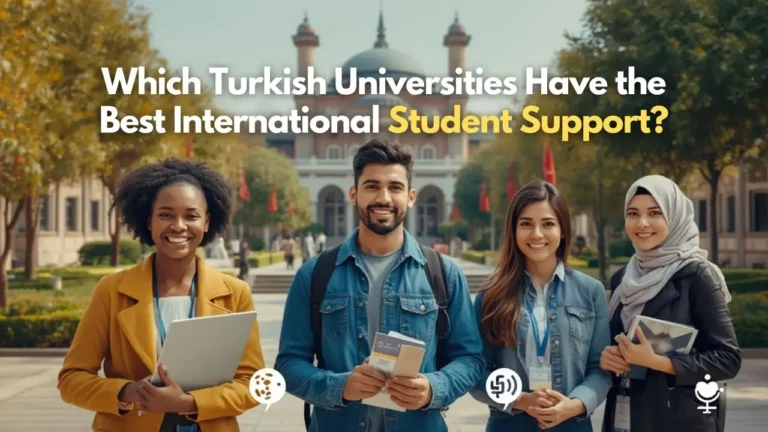
Which Turkish Universities Have the Best International Student Support?
A Kenyan student arrived at Istanbul Airport last September with university admission, visa, and confidence that everything would be fine. Three hours later, she sat in our emergency consultation video call, overwhelmed and confused. Her university’s “airport pickup service” never appeared. The dormitory she’d been assigned was full. The international office phone number went to voicemail. She had no idea how to get a Turkish SIM card, open a bank account, or find temporary accommodation.
This isn’t an isolated incident, it’s embarrassingly common. Turkish universities compete aggressively to attract international students with glossy marketing materials promising comprehensive support. But when students actually arrive, support quality varies from exceptional to essentially nonexistent, and the difference profoundly affects whether international students thrive or struggle throughout their education.
Here’s what nobody tells you during the recruitment phase: international student support isn’t standardized across Turkish universities. Some institutions have dedicated international offices with English-speaking staff, structured orientation programs, and ongoing assistance systems. Others have a single part-time coordinator managing hundreds of students, leading to predictable chaos when problems arise—and problems always arise when you’re navigating a foreign country’s bureaucracy, language, and cultural norms.
This article identifies which Turkish universities genuinely support international students beyond admission acceptance, explains what meaningful support actually looks like, and reveals how to evaluate institutional promises before you commit. More importantly, we’ll show you what to look for during university selection to avoid the Kenyan student’s experience.
What Real Support Actually Means (Not Marketing Promises)
Universities market “comprehensive international student support” constantly. But support isn’t a checkbox, it’s an ecosystem of services, personnel, and systems that either function effectively or create frustrating gaps when you need help most.
Meaningful support includes: English-speaking staff availability during business hours (not just email responses), clear processes for residence permits, health insurance, and legal requirements, assistance with practical necessities (bank accounts, SIM cards, transportation cards), orientation programs that actually orient rather than just welcome, ongoing academic advising understanding international student contexts, cultural integration programs and student clubs, career services helping international students navigate Turkish or global job markets, emergency protocols when serious problems arise, and peer support systems connecting new students with experienced international students.
Universities claiming “full support” without these components are overselling reality. The question isn’t whether universities say they support international students—almost all do. The question is whether they’ve invested in infrastructure, personnel, and systems to deliver that support consistently when hundreds of international students arrive simultaneously each semester needing assistance.
Universities That Actually Deliver: The Top Tier
Based on extensive feedback from students we’ve placed, systematic evaluation of services, and direct communication with international offices, certain Turkish universities consistently demonstrate superior international student support.
Koç University
Koç operates what might be Turkey’s most professional international office. The staff-to-student ratio is reasonable (approximately 1 staff member per 50-60 international students), response times are quick, and systems are genuinely organized.
What they do differently: comprehensive pre-arrival communication including detailed guides, checklists, and contacts; organized airport pickup service that actually shows up; structured two-week orientation covering everything from residence permits to Turkish culture; dedicated academic advisors familiar with international student challenges; active buddy program pairing new international students with experienced students; regular events facilitating cultural exchange and integration; and career services explicitly addressing international student employment questions.
The result: international students at Koç consistently report feeling supported rather than abandoned. When problems arise—delayed residence permits, housing issues, academic struggles—there’s clear protocol and responsive personnel. This doesn’t mean everything is perfect, but support infrastructure exists rather than improvised.
The limitation: Koç is private university with selective admission and higher tuition ($15,000-20,000 annually). The superior support is partially funded by higher fees, meaning it’s accessible primarily to students who can afford private education or secure substantial scholarships.
Sabancı University
Sabancı has deliberately prioritized international student experience as part of its institutional identity. The university mandates international experiences for all students—including Turkish students—creating cultural integration rather than separating international students into isolated support bubbles.
Distinctive features: international office staff who genuinely care (students consistently praise specific staff members by name—a telling indicator); comprehensive housing support including assistance finding off-campus accommodation when dormitories are full; robust student clubs where international and Turkish students mix naturally; strong alumni network connecting current students with graduates who faced similar challenges; and transparent communication about processes, timelines, and requirements reducing anxiety.
One Pakistani student told us: “At Sabancı, I never felt like I was bothering anyone when I asked questions. The international office treated my concerns as legitimate, not nuisances.” That attitude—treating international student needs as priority rather than burden—distinguishes truly supportive institutions.
Bilkent University
Bilkent combines professional international office operations with comprehensive campus infrastructure supporting independent living. The university has hosted international students for decades, creating institutional knowledge about common challenges and effective solutions.
Support strengths: extensive pre-arrival resources including video guides and FAQ databases; efficient residence permit processing with university handling much of the bureaucracy; well-maintained campus housing with clear procedures and responsive maintenance; health center providing basic medical care without requiring navigation of external Turkish healthcare system; campus shuttle service reducing transportation confusion for new arrivals; and established international student community providing organic peer support beyond official programs.
The campus location in Ankara (not Istanbul) actually becomes advantage for support purposes—Bilkent’s somewhat isolated location creates tight-knit community where international students build strong networks and the university becomes central to student life, naturally increasing support touchpoints.
Özyeğin University
Özyeğin represents newer private universities investing heavily in international student infrastructure as competitive differentiation strategy. The university explicitly markets itself to international students, creating institutional imperative to deliver promised support or face reputation damage.
Notable support elements: small international student population (compared to larger universities) allowing more personalized attention; international office physically located in easily accessible central campus location (not administrative building requiring navigation); regular check-in meetings with international students proactively identifying problems before they escalate; flexible approaches when standard processes don’t fit international student situations; and responsive communication across multiple channels (email, WhatsApp, phone, in-person).
One Nigerian student shared: “When my scholarship payment was delayed and I couldn’t pay rent, Özyeğin’s international office intervened, communicated with finance department, and helped arrange temporary solution. They treated me like I mattered, not just another file number.”
That’s the difference—treating international students as individuals with unique circumstances rather than processing them through rigid systems designed for Turkish students.
The Middle Tier: Adequate But Inconsistent
Several universities provide decent support but with notable gaps or inconsistencies that create occasional frustration.
Boğaziçi University has strong academic reputation but international student support that’s more functional than exceptional. The international office manages processes efficiently but isn’t particularly warm or proactive. Services exist, but students need to seek them out rather than being guided through. For independent, self-sufficient students, this works fine. For those needing more hand-holding, it can feel insufficient.
Istanbul Technical University has invested in international student support infrastructure but struggles with scale—large international student population relative to dedicated staff creates occasional bottlenecks and delayed responses. When you reach the right person, support is solid. Getting to the right person can require persistence.
METU (Middle East Technical University) provides academically rigorous environment with decent practical support for visas, permits, and administrative needs, but cultural integration support is limited. METU’s academic intensity means less emphasis on social programming, leaving international students to create their own integration pathways. This suits some students perfectly but leaves others feeling isolated.
These universities won’t abandon you, but support requires more student initiative and sometimes patience when navigating processes. Compare international student services across multiple universities to understand specific offerings before committing.
The Challenging Tier: Support Exists in Theory
Some Turkish universities, particularly regional public universities and smaller private institutions, provide minimal international student support beyond basic legal compliance. These aren’t bad universities academically, but international students essentially navigate Turkey independently with limited institutional assistance.
Common problems: international offices staffed by personnel with limited English, single coordinator managing hundreds of international students, reactive rather than proactive assistance (only responding when students encounter problems), minimal orientation beyond legal requirements, few cultural integration programs or international student communities, and career services focused exclusively on Turkish students and Turkish job market.
We don’t name specific universities here because situations change as institutions invest (or divest) in international programs, and individual student experiences vary. But warning signs during application phase include: difficulty getting email responses from international offices, generic responses not addressing specific questions, requests to communicate only through general university email rather than dedicated international contacts, absence of current international student testimonials or connection opportunities, and vague descriptions of support services on university websites.
If you’re considering universities where support quality is unclear, connect with current international students directly through social media or university forums. Their experiences reveal far more than official materials.
What to Evaluate Before You Commit
Don’t rely on marketing materials or rankings to assess international student support. Use these concrete evaluation criteria:
Test responsiveness before applying: email the international office with specific questions (about visa processes, accommodation, specific academic programs). Evaluate response time, helpfulness, English language clarity, and whether answers address your actual questions or provide generic information. Universities that respond promptly and thoroughly demonstrate operational competence and appropriate staffing.
Request connection with current international students: universities with strong support readily connect prospective students with current international students. Those hesitant to facilitate these connections may be protecting prospective students from hearing less-than-glowing experiences.
Examine international office staff structure: how many dedicated personnel serve international students? What’s the student-to-staff ratio? Are staff multilingual? Specific structural details matter more than vague promises of “comprehensive support.”
Review practical logistics carefully: where is international office located physically? What are office hours? How do students schedule appointments or access emergency assistance outside business hours? Universities that have thought through these operational details demonstrate commitment to functional support.
Investigate housing support specifically: do universities guarantee housing for international students, or are you responsible for finding accommodation independently in an unfamiliar market? Housing confusion creates massive stress—verify specific support before assuming it exists.
Ask about ongoing support, not just arrival assistance: many universities organize airport pickup and initial orientation but provide minimal assistance afterward. What happens when you need help with residence permit renewal six months later? With academic struggles mid-semester? With career planning in your third year?
Geographic Considerations: Istanbul vs. Other Cities
Location affects support needs and availability in ways that matter practically.
Istanbul’s advantages and challenges: massive international student population means robust community support and English-speaking services in many contexts; but large population also means university support can feel less personalized, and navigating a massive city creates stress when support is inadequate.
Ankara’s character: smaller international student population means more personalized university attention at institutions prioritizing international students; city is manageable and less overwhelming than Istanbul; but fewer English-speaking services outside university bubble requiring more adaptation.
Regional cities: substantially smaller international student populations create tight-knit communities where universities may provide more personalized support by necessity; but limited English-speaking infrastructure outside university and fewer international services requiring greater independence and adaptation skills.
Your optimal location depends on support needs and independence level. Students who need substantial guidance and prefer diverse, English-speaking environments may find Istanbul’s challenges worthwhile. Independent students comfortable with adaptation might thrive in Ankara or regional cities where tight communities compensate for limited external infrastructure.
The Reality Check: What Support Can’t Fix
Even excellent support can’t compensate for certain fundamental challenges:
Support can’t replace personal initiative. Turkish bureaucracy requires documentation, patience, and sometimes multiple attempts at processes. Support offices guide you through requirements but can’t complete processes for you. Students expecting universities to handle everything inevitably face disappointment.
Support can’t eliminate cultural adaptation stress. Even with comprehensive orientation and cultural programs, adjusting to Turkish culture, social norms, and daily life requires personal effort, openness, and time. Support eases this transition but doesn’t eliminate it.
Support can’t guarantee career outcomes. Career services can provide guidance, connections, and resources, but ultimately employment depends on your qualifications, market conditions, and individual effort. International students expecting universities to deliver jobs face unrealistic expectations.
Support quality varies by individual staff members. Even at universities with strong support reputations, you may encounter unhelpful individual staff members. Conversely, struggling universities sometimes have exceptional individual staff members who go far beyond job requirements. Systems matter more than individuals, but individual experiences vary.
Set realistic expectations: support should facilitate your success through guidance, resources, and assistance navigating unfamiliar systems—not guarantee success regardless of your effort or absolve you of personal responsibility for adaptation and problem-solving.
How EduTürkiye Fills the Gaps
University support, even at best institutions, operates within constraints—staff capacity, institutional priorities, budget limitations. Many international students need supplementary support beyond what universities provide, particularly during transition periods or when navigating complex situations.
At EduTürkiye, we function as extended support system complementing university services: pre-arrival preparation including detailed practical guidance beyond university orientations; independent advocacy when university processes stall or problems arise requiring external intervention; cultural orientation from professionals who understand both international student perspectives and Turkish contexts; ongoing consultations throughout your studies, not just during application phase; connections to experienced international students, alumni, and professional networks beyond university-provided contacts; and realistic guidance about career planning, further education, and post-graduation options considering your specific circumstances.
We’ve worked with thousands of international students across dozens of Turkish universities, creating comprehensive knowledge about where support is strong, where gaps exist, and how to navigate challenges regardless of your institution. This independent perspective—not beholden to any specific university’s marketing—allows us to provide honest guidance about which institutions truly deliver promised support and where students need supplementary assistance.
Most importantly, we help students develop realistic expectations. Turkish universities aren’t American or British institutions transplanted to Turkey—they operate within Turkish context with different norms, resources, and approaches. Students who expect Turkish universities to function identically to Western universities inevitably face disappointment. Those who understand what Turkish universities actually provide and adapt expectations accordingly typically thrive.
Support quality matters enormously for international student success, but it’s one factor among many—academic quality, costs, cultural fit, career prospects—that determine optimal university choice. The goal isn’t finding perfect support but understanding what support actually exists, where gaps remain, and whether you’re comfortable navigating those gaps with available resources and personal resilience.
Key Takeaways
- Support quality varies dramatically across Turkish universities: from exceptional (Koç, Sabancı, Bilkent) to essentially nonexistent at some institutions—university marketing rarely reflects this reality accurately.
- Meaningful support includes specific operational elements: English-speaking accessible staff, clear processes for legal requirements, practical assistance with daily necessities, ongoing academic advising, cultural integration programs, career services, and emergency protocols—not generic promises.
- Private universities generally provide superior support: higher tuition funds better staff-to-student ratios, professional operations, and comprehensive services—though top public universities (Boğaziçi, METU, ITU) provide adequate if less personalized support.
- Test support quality before committing: email international offices with specific questions evaluating response time, helpfulness, and English proficiency; request connections with current international students for honest experience reports; and examine structural details (staff numbers, office hours, physical location).
- Location affects support needs differently: Istanbul’s international infrastructure reduces dependence on university support but city complexity creates challenges; Ankara and regional cities require more university reliance but often provide more personalized attention.
- Support cannot replace personal initiative: even excellent support requires students to actively engage processes, ask questions, seek resources, and take responsibility for adaptation—universities facilitate success but don’t guarantee it regardless of student effort.
- Pre-arrival communication quality predicts ongoing support: universities that provide comprehensive pre-arrival resources, clear timelines, and accessible contacts typically continue strong support throughout enrollment; vague pre-arrival communication often indicates systematic support weaknesses.
- Peer support networks matter as much as institutional services: established international student communities provide practical guidance, emotional support, and integration assistance that complement formal university services—evaluate community strength alongside official offerings.
- Support gaps exist even at best universities: no institution perfectly addresses all international student needs; realistic expectations about support limitations prevent disappointment while allowing appreciation of genuine assistance provided.
- Supplementary support from independent consultants fills critical gaps: organizations like EduTürkiye provide advocacy, cultural orientation, ongoing guidance, and independent perspectives complementing university services throughout your educational journey, not just during applications.