Why More African Students Are Choosing Turkey Over Europe?
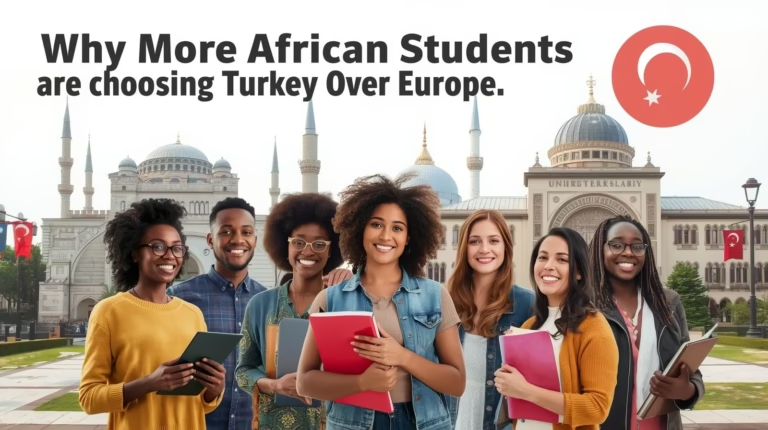
The landscape of international education for African students is experiencing a dramatic shift. While European destinations like the United Kingdom, France, and Germany have traditionally dominated as preferred study abroad locations, Turkey has emerged as an increasingly attractive alternative. Over the past decade, the number of African students choosing Turkish universities has surged, with countries like Nigeria, Somalia, Kenya, Sudan, and Senegal sending thousands of students annually to Turkey. This trend represents more than just a geographical pivot, it reflects changing perceptions about where African students can receive quality education, cultural acceptance, and valuable career opportunities.
In 2024, African students constitute one of the largest regional groups studying in Turkey, with numbers continuing to grow each year. This remarkable shift raises an important question: What makes Turkey so appealing compared to traditional European destinations? The answer involves multiple factors including affordability, cultural compatibility, visa accessibility, scholarship availability, and Turkey’s strategic focus on strengthening educational partnerships with African nations. Understanding these factors helps explain why Turkey has become a compelling choice for ambitious African students seeking international education and the opportunities it provides.
The Cost Factor: Affordable Quality Education
Perhaps the most compelling reason African students increasingly choose Turkey over Europe is the stark difference in affordability without compromising educational quality. European universities, particularly in the UK, Netherlands, and Scandinavian countries, charge international students tuition fees ranging from $15,000 to $40,000 annually. When combined with Europe’s high living costs—especially in cities like London, Amsterdam, or Copenhagen, the total annual expense easily exceeds $30,000-60,000, making European education financially prohibitive for most African families.
Turkey offers a dramatically different financial proposition. Public Turkish universities charge international students tuition fees typically ranging from $400 to $4,000 annually—often less than what students would pay for a single semester at European institutions. Private universities, while more expensive at $4,000-15,000 annually, still remain significantly cheaper than European alternatives while offering quality education and modern facilities.
Living costs in Turkey present equally compelling advantages. Cities like Istanbul, Ankara, and Izmir offer vibrant urban experiences with monthly living expenses typically ranging from $400-700, covering accommodation, food, transportation, and personal needs. This affordability contrasts sharply with European cities where similar lifestyles cost $1,500-2,500 monthly. For African students and families managing exchange rate pressures and limited foreign currency access, Turkey’s affordability transforms international education from an impossible dream to an achievable goal.
The Council of Higher Education (YÖK) has explicitly prioritized making Turkish higher education accessible to international students, particularly from developing regions. This policy commitment ensures that cost advantages aren’t temporary market fluctuations but sustained strategic priorities supporting educational diplomacy and international partnerships.
Türkiye Scholarships: A Game-Changing Opportunity


The Turkish government’s flagship scholarship program, Türkiye Scholarships, represents one of the most generous international scholarship initiatives globally and has become a major draw for African students. This comprehensive scholarship provides full tuition coverage, monthly stipends (currently around $300-400 depending on degree level), accommodation support or housing allowance, health insurance, one-year Turkish language preparation program, and even airfare to and from Turkey.
For African students, Türkiye Scholarships offers opportunities that few European scholarship programs can match in scope and accessibility. While European countries offer scholarships, they’re often highly competitive with limited spots reserved for African students, require extensive documentation that’s difficult to obtain in some African countries, and emphasize specific fields or bilateral arrangements rather than broad accessibility.
Türkiye Scholarships, by contrast, welcomes applications from all African countries, accepts applications across all academic fields from undergraduate through doctoral studies, and maintains relatively accessible application processes with clear timelines and requirements. Thousands of African students receive these scholarships annually, transforming lives and creating educational opportunities that would otherwise remain inaccessible.
Beyond financial support, Türkiye Scholarships provides structured support systems including orientation programs, academic advising, cultural activities, and alumni networks. This comprehensive approach recognizes that international students need more than just financial assistance—they need holistic support enabling academic success and cultural adaptation.
Cultural and Religious Compatibility
For many African students, particularly from Muslim-majority countries, Turkey offers cultural and religious environments that feel more welcoming and comfortable than European destinations. Turkey, as a Muslim-majority country, provides prayer facilities, halal food options, and cultural norms that align with Islamic values while maintaining secular educational institutions and diverse social environments.
This compatibility extends beyond religion to broader cultural values. Turkish culture emphasizes hospitality, family connections, and community relationships—values that resonate strongly with many African cultures. African students frequently report feeling more welcomed and accepted in Turkey than in European countries where they sometimes encounter discrimination, social isolation, or cultural alienation.
Turkish universities host large African student populations creating supportive communities where new arrivals find mentorship, friendship, and shared experiences with compatriots and other African students. Student associations for various African countries maintain active presences on Turkish campuses, organizing cultural events, providing peer support, and creating home-away-from-home environments that ease transition challenges.
European countries, while offering quality education, sometimes present cultural adjustment challenges for African students. Language barriers in non-English-speaking European countries, social integration difficulties, and occasionally encountered discrimination create obstacles beyond academics. Turkey’s growing familiarity with African students and explicit welcoming policies create more inclusive environments where students can focus on education rather than constantly navigating cultural disconnection or discrimination.
Visa Accessibility and Immigration Policies
Obtaining student visas for European countries has become increasingly challenging for African students, with rejection rates often exceeding 40-50% despite having admission letters and meeting requirements. Stringent visa requirements, extensive documentation demands, long processing times, and high application fees create significant barriers. Many qualified African students face visa denials based on suspicions about intentions to overstay or insufficient financial proof, even when meeting stated criteria.
Turkey’s student visa process, while still requiring proper documentation, generally proves more accessible for African students. Turkish embassies and consulates across Africa have streamlined procedures specifically for student visa applications. The Turkish government’s explicit policy of attracting international students translates into more accommodating visa policies where genuine students with university admission letters typically receive visas without the suspicion and barriers common in European applications.
Processing times for Turkish student visas typically run 2-4 weeks compared to months for some European countries. Visa fees remain reasonable, usually around $60-100, compared to significantly higher European visa costs. The relative predictability and accessibility of Turkish student visas provide peace of mind for African students who’ve experienced or heard about European visa difficulties.
Turkey’s geographic position also facilitates visa processing. Many African countries host Turkish embassies and consulates enabling in-country applications, while some European countries have limited diplomatic presence in Africa requiring expensive travel to neighboring countries for visa applications.
Strategic Educational Partnerships with Africa

Turkey has strategically invested in building educational and diplomatic relationships across Africa over the past two decades. This commitment extends beyond rhetoric to concrete actions including establishing Turkish cultural centers and language institutes across African cities, providing scholarships specifically allocated for African students, supporting educational infrastructure development in African countries, and facilitating academic partnerships between Turkish and African universities.
President Erdoğan’s multiple visits to African countries and Turkey’s “African Opening” policy signal high-level political commitment to Turkish-African relations. Education forms a central pillar of this strategy, with Turkey viewing educational exchange as building long-term partnerships and mutual understanding. African students studying in Turkey become cultural ambassadors and create lasting connections between Turkey and their home countries.
This strategic emphasis creates an environment where African students aren’t merely tolerated but actively welcomed as partners in building Turkey-Africa relations. Universities, government agencies, and civil society organizations maintain programs supporting African students, recognizing their importance beyond individual education to broader bilateral relationships.
European countries, despite historical connections to Africa, often approach African students more cautiously, implementing restrictive policies aimed at limiting immigration rather than facilitating educational exchange. While European countries offer quality education, policy priorities don’t always emphasize welcoming African students, creating contrasts with Turkey’s explicit welcoming stance.
Quality Education and International Recognition
Turkey’s educational quality has improved dramatically over recent decades, with Turkish universities climbing international rankings and gaining global recognition. Universities like Boğaziçi, Middle East Technical University (METU), Istanbul Technical University, Koç, and Sabancı consistently rank among the world’s top institutions and maintain international accreditations ensuring quality standards.
Turkish engineering, medical, and business programs receive particular recognition globally. Turkish medical schools train doctors meeting international standards, with graduates practicing worldwide after completing licensing requirements in their target countries. Engineering programs at institutions like METU and ITU maintain reputations for rigor and quality comparable to European technical universities.
Turkish degrees are increasingly recognized across Africa and globally. Turkey’s participation in the Bologna Process aligns Turkish higher education with European standards, facilitating degree recognition. Bilateral education agreements between Turkey and numerous African countries establish frameworks for mutual recognition of qualifications. African students graduating from Turkish universities successfully pursue careers internationally and continue to graduate studies at prestigious institutions worldwide.
Many African students appreciate that Turkish education emphasizes practical skills alongside theoretical knowledge. Turkish universities maintain partnerships with industries providing internship opportunities and real-world applications of academic learning. This practical orientation prepares graduates for employment in ways that overly theoretical programs sometimes don’t.
English-Taught Programs and Language Opportunities
A common misconception is that studying in Turkey requires Turkish language proficiency. In reality, Turkish universities offer hundreds of English-taught programs across all academic levels, particularly at private universities and in graduate education. Fields like engineering, business, international relations, and sciences commonly feature English instruction, enabling African students to study without Turkish language barriers.
For programs taught in Turkish, most universities offer one-year preparatory Turkish language programs helping students achieve proficiency before beginning academic coursework. These programs, often included in scholarships or offered at nominal costs, transform potential language barriers into opportunities for multilingualism.
Learning Turkish provides significant advantages for African students. Turkey serves as a growing economic power with expanding business connections across Africa, the Middle East, and Central Asia. Turkish language skills enhance employment prospects with Turkish companies operating in students’ home countries or regional markets. Additionally, Turkish proficiency enriches cultural experiences and facilitates deeper engagement with Turkish society beyond academic environments.
Compared to studying in non-English-speaking European countries like Germany, France, or the Netherlands—where language requirements can be stringent—Turkey offers more flexibility. African students can choose English-taught programs avoiding language barriers or pursue Turkish-medium education with comprehensive language preparation support.
Career Opportunities and Professional Networks
Turkey’s growing economy and expanding business presence across Africa create career opportunities connecting students’ education with professional futures. Turkish companies increasingly operate in African markets across sectors including construction, textiles, consumer goods, technology, and finance. African students studying in Turkey build networks with these companies through internships, campus recruitment, and professional connections.
Turkish universities maintain active career services organizing job fairs, networking events, and recruitment activities. Many African students secure employment with Turkish companies either in Turkey or in operations across Africa, leveraging both their academic credentials and cultural knowledge of their home regions. This practical career pathway provides tangible returns on educational investments.
Alumni networks of African students who studied in Turkey span continents, creating professional and social connections supporting career development. These networks prove particularly valuable for entrepreneurial students who establish businesses connecting Turkey with African markets, leveraging relationships and knowledge gained during their education.
European career markets, while offering opportunities, sometimes present challenges for African graduates including work visa restrictions limiting post-graduation employment, preference for European nationals in hiring, and less direct connection between European companies and African markets compared to Turkish firms’ growing African presence.
Community and Support Systems
The large and growing African student community in Turkey creates support systems that ease transition challenges and provide sense of belonging. Cities like Istanbul host thousands of African students from dozens of countries, creating diverse, vibrant communities where students find compatriots, share experiences, and support each other.
Student associations for various African countries organize cultural events celebrating African heritage, provide practical support for new arrivals navigating bureaucratic processes, create social networks combating isolation and homesickness, and advocate for African student interests with universities and authorities. These organic support systems complement official university services, creating comprehensive networks supporting student success.
Turkish cities, particularly Istanbul, have developed African restaurants, shops, and community spaces where students access familiar foods, products, and cultural experiences. This cultural infrastructure makes Turkey feel more accommodating and comfortable than European cities where African communities might be smaller or less visible.
Challenges and Realistic Considerations
While Turkey offers compelling advantages, African students should maintain realistic expectations about challenges. Language barriers can initially complicate daily life in non-English-speaking environments, though this improves with time and Turkish language study. Bureaucratic processes for residence permits and other administrative matters can occasionally be complex, requiring patience and persistence. Distance from home creates emotional challenges, though affordable communications technology helps maintain family connections.
Some African students experience occasional cultural misunderstandings or curiosity from local populations less familiar with African diversity. However, most students report generally positive experiences and welcoming attitudes, particularly in university environments and major cities with substantial international populations.
Employment opportunities in Turkey for African graduates, while growing, remain more limited than in students’ home countries or some other destinations. Most African students view Turkish education as preparation for careers in their home countries or internationally rather than necessarily seeking long-term settlement in Turkey.